

Blog
Top 7 Picnic Table Materials for Outdoor Projects

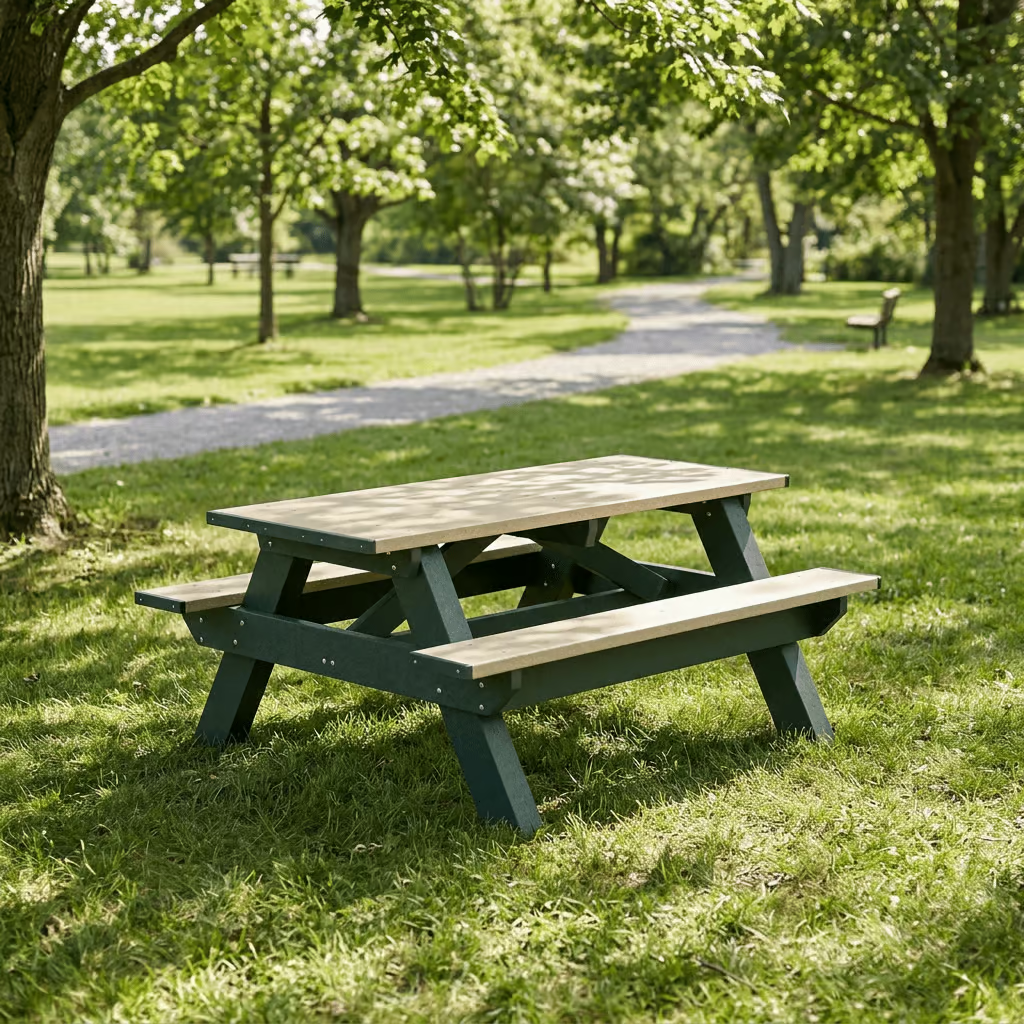
Specifying picnic tables for parks, schools, and commercial outdoor spaces starts with one central decision: material. The material you choose will determine how long the table lasts, how often it needs maintenance, how it handles weather exposure, and what kind of long-term value it delivers. For municipal parks departments, school facility teams, and commercial site managers, that decision has direct budget and workload implications for years.
Not all materials perform the same way once they are installed in the real world. Some look good in a catalog but fade, splinter, or rust after a few seasons. Others hold up structurally but require constant refinishing. A few are engineered from the outset for durability, low maintenance, and high lifecycle value in demanding outdoor conditions.
This guide ranks seven common picnic table materials using four core criteria:
- Durability in high-traffic environments
- Maintenance demands over the product life
- Weather and UV resistance
- Total lifecycle value (not just upfront cost)
Across those criteria, recycled HDPE (high-density polyethylene) emerges as the strongest long-term option for most public-use projects.
Polly Products manufactures commercial recycled plastic picnic tables using HDPE-based lumber designed for outdoor environments, aligning closely with the performance traits that matter most to public buyers.
Recycled HDPE (Recycled Plastic Lumber)
Recycled HDPE ranks first because it combines excellent durability, exceptionally low maintenance, strong weather resistance, and high lifecycle value. HDPE “plastic lumber” is engineered specifically for outdoor use and has proven performance in commercial settings.
Durability
- Recycled HDPE lumber is dense, stable, and resistant to the common failure modes that affect natural materials. It does not rot, splinter, or crack the way wood does, and it remains structurally sound under repeated public use.
- Handles high-traffic use in parks, schoolyards, and campuses
- Maintains structural integrity over many seasons
- Resists impact and everyday wear better than softwoods
For municipal and school buyers, that means fewer broken boards, fewer safety concerns, and fewer emergency work orders.
Maintenance
- Maintenance is where recycled HDPE really separates itself. HDPE picnic tables typically require only occasional cleaning and do not need painting, staining, sealing, or refinishing.
- No annual sanding, staining, or oiling
- No flaking paint or peeling coatings to repair
- Easy cleaning with soap, water, or mild cleaners
Industry guidance consistently notes that heavy-duty recycled plastic picnic tables can deliver many years of service with very little ongoing maintenance compared to wood.
Weather and UV Resistance
- HDPE excels in outdoor exposure. It resists moisture absorption, so it will not swell, warp, or host mold the way untreated wood can.
- High resistance to rain, snow, and humidity
- UV-stabilized formulations help control fading and degradation
- No corrosion issues in coastal or de-icing-salt environments
That makes HDPE particularly suitable for climates with significant seasonal swings or frequent precipitation.
Lifecycle Value
- Upfront, recycled HDPE picnic tables can be more expensive than basic wood options. However, when you factor in:
- Eliminated refinishing cycles
- Reduced repair and replacement
- Lower labor hours for maintenance
…HDPE often delivers the lowest cost per year of service. For public buyers balancing long-term budgets, that lifecycle performance is a key reason it takes the top spot.
Polly Products builds its commercial picnic tables from recycled plastic lumber specifically for these advantages, making them a strong choice for parks, schools, and commercial sites that need long-term value with minimal upkeep.
Powder-Coated Steel / Metal
Powder-coated steel and other metal constructions rank second. They offer strong structural durability and can handle heavy loads, but they introduce more maintenance risk over time.
Durability
Commercial-grade steel frames can provide excellent strength and rigidity. In some high-security or heavy-use installations, metal frames are preferred for their stiffness and impact resistance.
- Strong under static and dynamic loads
- Less likely to deform under heavy seating or leaning
However, durability depends heavily on the quality of the coating and how well it is maintained.
Maintenance
Powder coating provides an initial barrier against rust and corrosion, but once the coating is chipped, scratched, or worn, the underlying metal can begin to corrode.
- Requires inspection for chips and damage
- May need recoating or touch-up paint over time
- Risk of rust stains on adjacent surfaces if corrosion advances
In high-traffic areas—especially where tables are moved, dragged, or hit by equipment—that maintenance burden can increase.
Weather and UV Resistance
Metal handles UV light without the fading issues of some materials, but moisture is the real concern.
- Good UV resistance
- Vulnerable to corrosion in coastal, humid, or salt-treated environments
- Ice and freeze-thaw cycles can accelerate coating damage
Well-made, well-maintained metal picnic tables can last, but they demand more active monitoring than HDPE.
Lifecycle Value
Metal performs well where strength and anchoring are top priorities. But when you factor in potential coating repairs, corrosion management, and user comfort in temperature extremes, the lifecycle value is typically slightly lower than recycled HDPE for general park and school use.
Recycled Plastic Composite (Plastic + Fillers)
Recycled plastic composite lumber blends plastics with fillers like wood fibers or minerals. It’s designed to improve stiffness and appearance while maintaining many of the benefits of plastic.
Durability
- Quality composites can offer solid performance, with good resistance to rot and many weather-related issues.
- Does not rot like wood
- Often more rigid than pure plastic in some formulations
However, performance varies widely by brand and composition, so long-term durability can be less predictable.
Maintenance
Composites are generally lower-maintenance than wood, but they may still show surface wear, scratching, or fading over time.
- Typically no need for sealing or painting
- May require periodic cleaning to prevent staining or mildew
Compared to HDPE, composites sometimes require more care to maintain appearance, depending on the surface texture and color.
Weather and UV Resistance
Composites perform better than wood in wet conditions but may still experience issues such as surface chalking, fading, or micro-cracking depending on the formulation.
- Improved moisture resistance relative to wood
- UV performance depends on pigments and stabilizers
Lifecycle Value
For moderate-use environments, composite materials can be a solid mid-tier choice. But for heavy public use and maximum predictability, pure recycled HDPE usually offers a clearer maintenance and lifecycle advantage.
Thermally Modified Wood
Thermally modified wood is natural wood that has been heat-treated to improve stability and decay resistance.
Durability
The thermal process changes the wood structure, making it less hygroscopic and more resistant to biological decay.
- Better resistance to rot than untreated wood
- Improved dimensional stability
However, it is still wood, so it remains vulnerable to physical damage, surface wear, and UV exposure.
Maintenance
Thermally modified wood generally requires finishing to maintain color and weather protection.
- Needs periodic coating or oiling to look its best
- Surface can still weather to a gray tone over time if untreated
Maintenance demands are lower than some softwoods but still present.
Weather and UV Resistance
Thermal modification improves moisture performance, but UV exposure still causes color change and surface weathering.
Lifecycle Value
Thermally modified wood can be a good fit for projects where natural aesthetics are important and some maintenance is acceptable. For high-traffic public sites where staff capacity is limited, it still trails recycled HDPE in overall lifecycle value.
Pressure-Treated Softwood
Pressure-treated lumber is widely used because it’s familiar and cost-effective upfront.
Durability
The treatment improves resistance to insects and decay, but the underlying softwood can still warp, crack, and splinter over time.
- Better rot resistance than untreated wood
- Still subject to physical deterioration under heavy use
In public spaces, those splinters and cracks quickly become both a safety and aesthetic issue.
Maintenance
Pressure-treated tables require regular finishing to control moisture, UV damage, and surface roughness.
- Annual or periodic staining, sealing, or painting
- Ongoing inspection for splinters and surface hazards
Municipal and school crews often find this maintenance cycle hard to sustain across large inventories.
Weather and UV Resistance
Treatment helps preserve structural integrity but does not eliminate weathering and UV degradation.
Lifecycle Value
Low purchase price is offset by higher maintenance and shorter replacement cycles. Over a 10–15 year window, pressure-treated wood often costs more to operate than recycled HDPE, even though it costs less upfront.
Hardwood (e.g., Ipe, Teak, Other Dense Species)
Hardwoods are sometimes used for premium or design-focused outdoor installations.
Durability
Dense hardwoods can be very strong and resistant to decay, especially certain tropical species.
- Good structural performance
- High resistance to insect attack and rot in some species
But durability can vary by species, sourcing, and finishing practice.
Maintenance
To preserve appearance, hardwood typically requires regular oiling or finishing.
- Surface can weather to gray if not maintained
- Maintenance may be frequent to sustain a “like new” look
For high-use public installations, that upkeep is often impractical.
Weather and UV Resistance
Hardwoods can handle moisture reasonably well but will still weather and check under UV exposure without consistent care.
Lifecycle Value
In targeted, high-visibility installations, hardwood can be justified for aesthetics. For broad municipal or school deployments, the ongoing maintenance and sourcing considerations make it less attractive than HDPE from a lifecycle and sustainability perspective.
Untreated Softwood
Untreated softwood finishes last on this list because it performs poorly in the conditions typical of public outdoor spaces.
Durability
Without protective treatment, softwood absorbs moisture readily and is highly prone to rot, insect attack, warping, and splintering.
Maintenance
To remain usable, untreated softwood would require frequent coatings and repairs—more than most public works or facilities teams can support at scale.
Weather and UV Resistance
UV and moisture rapidly degrade untreated softwood, making it unsuitable for long-term public installations in most climates.
Lifecycle Value
Even though it can be cheap upfront, untreated softwood is usually the most expensive over time when you factor in frequent replacements and high labor demand.
Why Recycled HDPE Is the Strongest Long-Term Option
When you compare all seven materials on durability, maintenance, weather resistance, and lifecycle value, recycled HDPE consistently comes out ahead for parks, schools, and commercial outdoor spaces.
- Maintains structural integrity in high-traffic, high-use environments
- Resists moisture, insects, rot, and many common failure modes
- Requires minimal maintenance—usually just cleaning
- Offers strong weather and UV resistance in a wide range of climates
- Delivers superior lifecycle value, even if upfront costs are higher than basic wood
Industry guidance notes that heavy-duty recycled plastic picnic tables can remain in service for many years with little more than routine cleaning, making them more cost-effective than wood over their lifespan.
Polly Products uses recycled plastic lumber based on HDPE in its commercial picnic tables, aligning with these performance characteristics and giving municipal, school, and commercial buyers a material choice that actually works with limited maintenance resources.
For outdoor projects where reliability, safety, and long-term budget control matter, recycled HDPE is the clear leader in picnic table materials.