


Blog
Heavy-Duty Picnic Tables for Landscape Architects

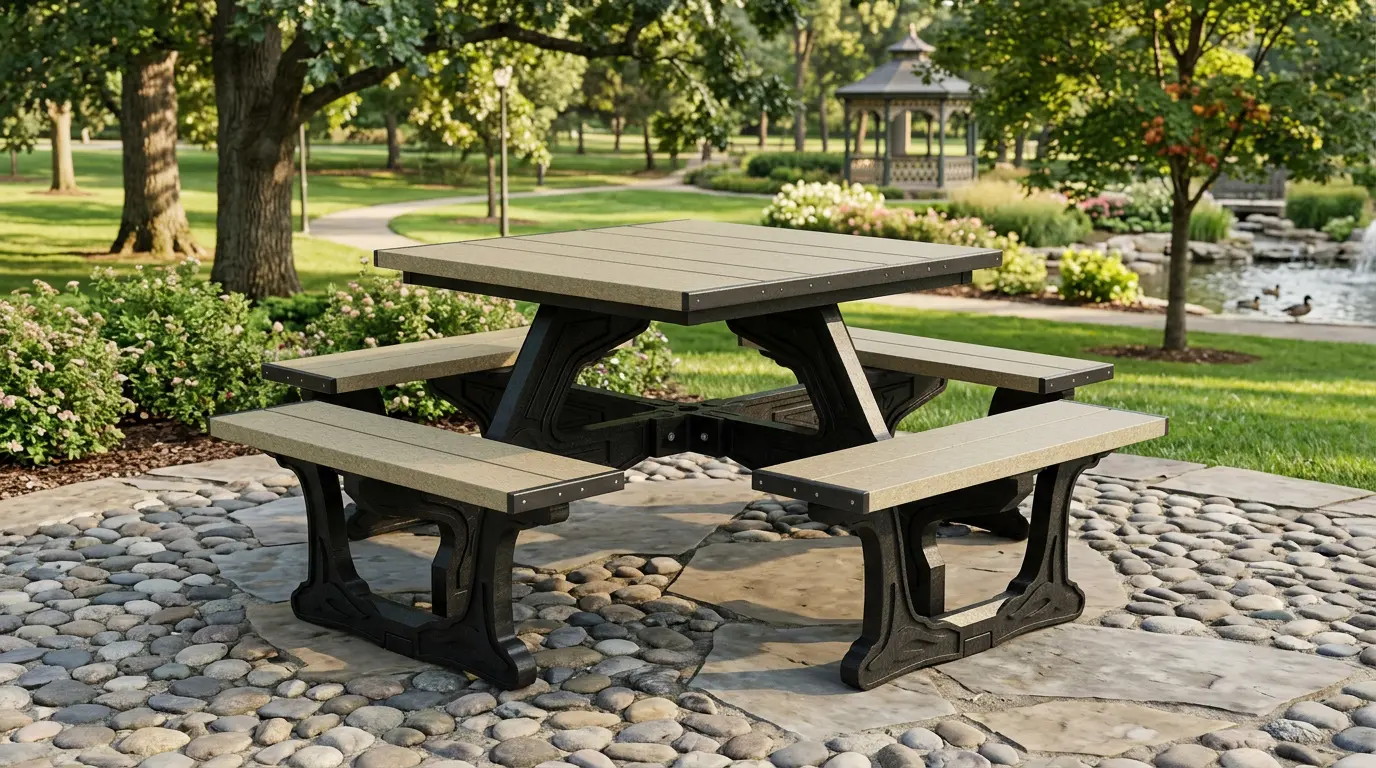
Heavy-Duty Picnic Tables for Landscape Architects
When landscape architects design an outdoor space, every element has to work together. Circulation, planting, grading, drainage, shade, materials, and furnishings all contribute to the experience of the finished site. Yet some of the most frequently used elements—picnic tables and other outdoor furnishings—can be overlooked during the early stages of design.
That is a mistake.
A picnic table isn't simply a place to sit and eat. In parks, schools, municipal spaces, corporate campuses, hospitality properties, campgrounds, and recreational facilities, it becomes part of the site's infrastructure. It needs to withstand weather, repeated use, spills, impacts, cleaning, and years of exposure while remaining comfortable and accessible.
For landscape architects, choosing the right material and construction can make a significant difference in long-term performance.
Recycled plastic commercial picnic tables offer a compelling solution. They combine the durability needed for demanding public environments with relatively low maintenance and the flexibility to support accessibility, sustainability, and aesthetic goals.
Why Picnic Tables Deserve More Attention in Landscape Architecture
Outdoor furnishings often represent a relatively small portion of a project's overall budget, but they have an outsized impact on how people use a space.
A picnic table can define a gathering area, support community programming, provide informal dining, or encourage people to stay longer in a park or plaza. Because these furnishings are touched and used constantly, their performance is highly visible.
For landscape architects, that means picnic tables should be evaluated like other site materials—not simply selected based on appearance or initial price.
The right questions include:
- How will the material perform in sun, rain, snow, and temperature changes?
- How much maintenance will the owner need to provide?
- Will the tables remain attractive after years of use?
- Can the furnishings accommodate users with different mobility needs?
- Will the material support the project's sustainability objectives?
- Can the furniture withstand the level of use expected at the site?
- Does the manufacturer provide a commercial warranty appropriate for the application?
These considerations become especially important when specifying heavy-duty outdoor furniture for public and commercial environments.
What Makes a Picnic Table "Heavy-Duty"?
Heavy-duty doesn't simply mean that a table is heavy.
For landscape architects, heavy-duty outdoor furniture should be designed around the realities of commercial and public use. That means durable materials, robust construction, reliable hardware, and a design capable of handling repeated use over a long service life.
A picnic table at a private residence may be used occasionally by the same family. A picnic table in a municipal park could be used by hundreds or thousands of people over the course of a season.
That difference matters.
Durable picnic tables should be able to handle frequent loading and unloading, people sitting on benches, children climbing around furnishings, equipment being moved around the site, and the everyday abuse that comes with public environments.
Weight can also be an advantage.
Heavier furnishings are generally less likely to move, tip, or become displaced during everyday use or windy conditions. For certain installations, substantial weight can help a picnic table stay where it was intended to be.
The Material Matters
One of the most important decisions when specifying landscape materials is selecting materials that make sense for the environment in which they will be installed.
Traditional wood picnic tables can provide a familiar aesthetic, but wood requires ongoing attention to maintain its appearance and structural performance. Depending on the species and finish, wood may require staining, sealing, painting, or replacement of deteriorated components.
Metal presents another option, but exposed metal can become extremely hot in direct sunlight and may be susceptible to corrosion depending on the material and finish.
Recycled plastic provides a different approach.
High-density polyethylene, commonly referred to as HDPE, can be manufactured into durable profiles suitable for outdoor furniture. Because the material is not susceptible to rot like wood, it can be particularly well suited to environments where furnishings are exposed to moisture.
For landscape architects, that can translate into a simpler maintenance strategy over the life of the installation.
Recycled Plastic and Outdoor Seating Durability
The durability of outdoor furnishings is about more than surviving one storm or one season. It's about maintaining performance year after year.
Commercial picnic tables are exposed to an unusually demanding combination of factors:
UV exposure: Outdoor furniture can spend thousands of hours in direct sunlight.
Moisture: Rain, snow, irrigation, humidity, and wet ground can all affect site furnishings.
Temperature changes: Outdoor materials experience repeated expansion and contraction as temperatures fluctuate.
Heavy use: Public furnishings can experience substantially more use than residential furniture.
Cleaning: Parks, schools, restaurants, and other commercial properties may clean furnishings frequently.
Recycled plastic is well suited to these conditions because it doesn't absorb water like wood and doesn't rust like conventional steel.
That doesn't mean every recycled plastic product is identical. Manufacturing quality, material formulation, UV stabilization, construction, hardware, and engineering all matter.
Landscape architects should evaluate the complete product—not simply the words "recycled plastic" on a specification sheet.
Low Maintenance Can Have a Major Impact
One of the most overlooked factors in landscape architecture is what happens after the ribbon-cutting ceremony.
The owner or facilities team ultimately has to maintain the site.
A material that looks beautiful when installed but requires frequent refinishing can create a substantial long-term maintenance obligation. Over the life of a public project, those recurring costs can become much more significant than the original purchase price.
Recycled plastic furnishings can reduce some of those maintenance requirements.
They generally don't require the routine staining, sealing, or painting associated with many wood products. They can also be cleaned relatively easily, making them practical for parks, schools, hospitality venues, and other high-use locations.
For a landscape architect, specifying low-maintenance furnishings isn't simply about convenience. It's about designing a site that the owner can realistically maintain for decades.
Accessibility Should Be Part of the Furniture Conversation
Accessibility is another critical consideration when selecting commercial picnic tables.
A successful outdoor space should give as many people as possible the opportunity to participate. Picnic areas should therefore be evaluated not only for the number of seats they provide but also for how those seats are accessed.
Accessible picnic tables can incorporate features such as extended table ends that provide appropriate clearance for wheelchair users. Placement also matters. The accessible seating position needs to connect logically with accessible routes and surrounding circulation.
Landscape architects should consider the entire picnic area rather than treating an accessible table as an isolated product.
Questions to consider include:
- Is there an accessible route to the table?
- Is there adequate clear space around the accessible seating position?
- Does the table work with the site's overall circulation?
- Are accessible and conventional seating options integrated naturally?
- Does the furniture arrangement support groups with different needs?
Good design makes accessibility part of the overall experience rather than an afterthought.
Designing for Long-Term Value
The lowest initial purchase price doesn't necessarily produce the lowest cost over the life of a project.
Landscape architects frequently work on projects expected to serve communities for decades. A picnic table that needs to be refinished, repaired, or replaced prematurely can increase the owner's total cost of ownership.
This is why lifecycle thinking is valuable when specifying outdoor furnishings.
Consider the equation:
Initial cost + maintenance + repairs + replacement = lifecycle cost
A durable commercial picnic table may cost more initially than a basic alternative, but if it requires significantly less maintenance and remains serviceable for substantially longer, the economics can change.
Warranty is another useful indicator.
A manufacturer willing to provide a substantial commercial warranty is demonstrating confidence in the expected performance of its product. Landscape architects should review warranty terms carefully, including what is covered, what is excluded, and whether the warranty is appropriate for commercial or public applications.
Sustainability Beyond the Product Label
Sustainability has also become an increasingly important part of specifying landscape materials.
Landscape architects are being asked to consider not only how a product performs but also where its materials come from, how long it will last, and what happens at the end of its useful life.
Recycled HDPE can provide an opportunity to incorporate post-consumer material into site furnishings while keeping that material in productive use.
At Polly Products, recycled HDPE #2 is transformed into outdoor furnishings designed for commercial and public environments. The result is a product that combines recycled material content with the durability expected from commercial site furniture.
This is an important distinction: sustainability doesn't have to mean sacrificing performance.
In fact, one of the most sustainable characteristics of a site furnishing can be its ability to remain in service for a long time.
Specifying Commercial Picnic Tables
When developing a landscape architecture specification, it helps to evaluate picnic tables using objective criteria rather than simply selecting a style.
Consider including requirements for:
- Material composition
- Recycled content
- UV resistance
- Hardware and fasteners
- Structural construction
- Weight and stability
- Available lengths and configurations
- Accessible seating options
- Finish and color options
- Cleaning and maintenance requirements
- Warranty
- Commercial-use suitability
- Domestic manufacturing, when relevant
- Sustainability documentation
These criteria allow the furnishing to become a deliberate part of the project's material palette.
They also make it easier for owners and contractors to understand why a particular product was selected.
Where Heavy-Duty Picnic Tables Make Sense
The applications for commercial picnic tables extend far beyond traditional parks.
Landscape architects may specify heavy-duty outdoor furniture for:
- Municipal parks
- County and state parks
- Schools and universities
- Corporate campuses
- Healthcare campuses
- Resorts and hotels
- Restaurants and breweries
- Zoos and aquariums
- Campgrounds
- Sports complexes
- Apartment and multifamily developments
- Senior living communities
- Trails and recreation areas
- Government facilities
- Community centers
Each application has different requirements, but they share a common need: outdoor furniture that can perform reliably in the real world.
A Better Way to Think About Picnic Tables
The best picnic table specification isn't necessarily the one with the most features.
It's the one that makes sense for the site.
Landscape architects have an opportunity to look beyond aesthetics and initial cost and consider how a furnishing will perform five, ten, or twenty years after installation.
That means asking whether the material can handle the climate, whether maintenance requirements are realistic, whether the furniture supports accessibility, whether the construction is appropriate for commercial use, and whether the product aligns with the project's sustainability objectives.
A well-designed outdoor space should age gracefully.
The furniture should be part of that equation.
The Bottom Line
For landscape architects and site specifiers, selecting picnic tables is an exercise in balancing durability, maintenance, accessibility, sustainability, aesthetics, and lifecycle value.
Recycled plastic commercial picnic tables can address many of those requirements in a single furnishing category. When properly engineered and manufactured, recycled HDPE furnishings can provide the heavy-duty performance required for demanding outdoor environments while reducing maintenance requirements and incorporating recycled material into the built environment.
The next time you're developing a park, campus, hospitality property, or other outdoor gathering space, don't treat the picnic table as an afterthought.
Treat it as part of the architecture of the landscape.