

Blog
Which Mini Skid Steer Attachments Suit a Small Parks Crew: Mulch, Trail Grading, Brush and Fence Lines

When a small parks crew regrades a trail or refreshes a picnic area, it’s a good time to look at how people use the space. A freshly graded trail might have a natural spot for a rest bench, and a picnic area refresh can be a chance to rethink where tables go. In this guest article, Braden Chupp of Chupp Industrial shares how small crews can put a mini skid steer to work on the grounds jobs that often come up alongside those upgrades.
Guest article by Braden Chupp, Chupp Industrial
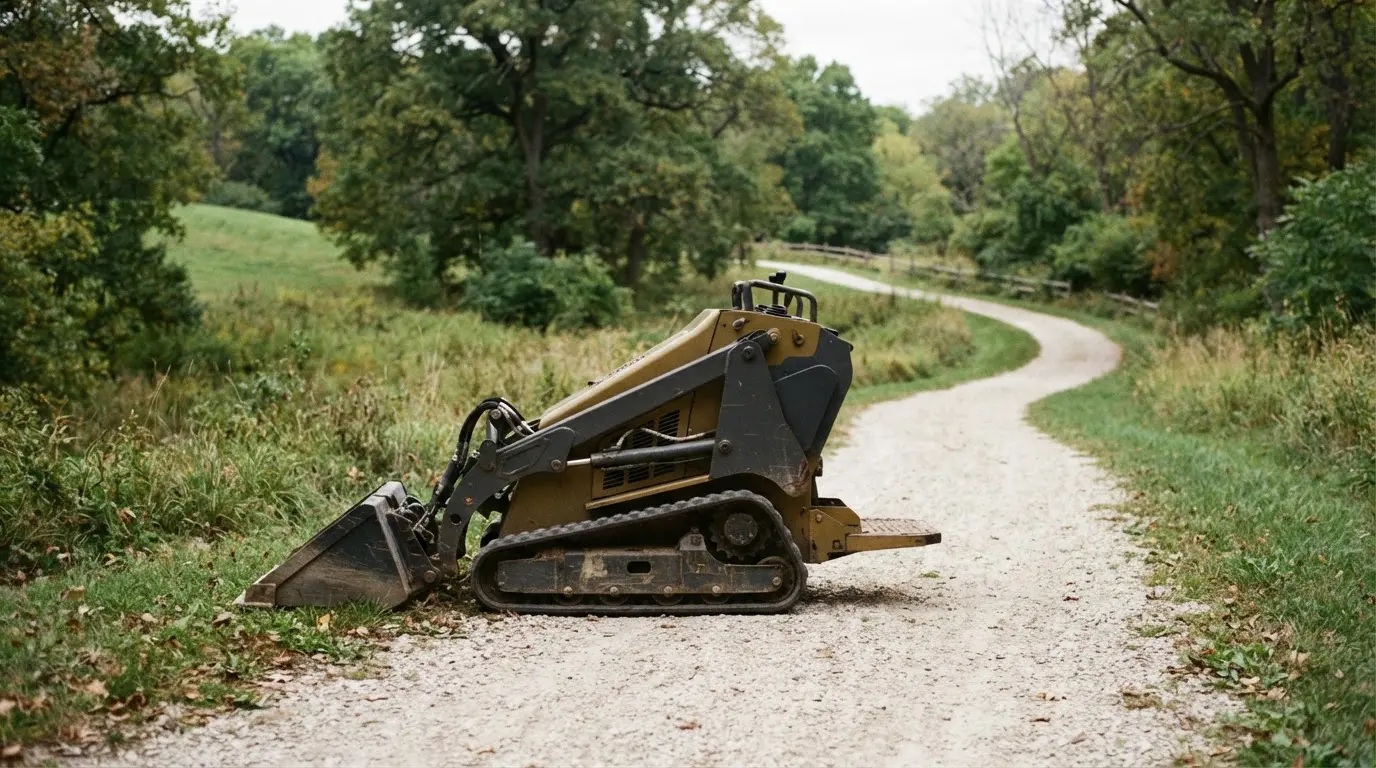
A small parks crew has a long list and a short staff. One week it is fresh mulch under the playground, the next it is a washed-out trail, a fence line swallowed by brush, or a dozen new posts for a picnic area. A mini skid steer (often called a mini track loader or stand-on loader) can handle most of that list, but only if it carries the right tool. The machine is just the carrier. The attachment does the work.
Here is how to match attachments to the jobs parks crews do most, plus a few questions to ask before you buy or rent anything.
Why a mini machine fits park work
Parks are full of tight spots: gates, paths between trees, playground borders, and turf you do not want torn up. A compact loader fits through openings a full-size skid steer cannot, and tracked models spread their weight so they leave less damage on grass and soft ground. The tradeoff is capacity. A mini machine moves smaller loads per trip, so it shines on many small jobs spread across a property, which is exactly what most park days look like.
Mulch and loose material: bucket first, then a rake
Standard or light-material bucket. For playground mulch, wood chips and topsoil, a bucket is the workhorse. A light-material bucket is larger than a dirt bucket because mulch is light, so you move more per trip without overloading the machine. Load from the pile, drive to the bed, and dump in small piles you can spread by hand or with the machine.
Landscape rake or soil conditioner. Once material is down, a landscape rake or power rake levels it and pulls out rocks and sticks. On ball fields and new turf areas it can prepare a seedbed in a fraction of the time hand raking takes.
Tip for playgrounds: surfacing depth matters for fall safety. The U.S. Consumer Product Safety Commission’s Public Playground Safety Handbook covers recommended depths for loose-fill materials like wood mulch and chips. Check your depth after spreading and again after a season of use, since loose fill compacts and gets kicked out of high-traffic spots under swings and slide exits.
Trail grading and drainage: box blade, grader or leveler
Trails fail in predictable ways: ruts down the center, puddles in low spots, and gravel that migrates to the edges.
Box blade or leveling attachment. These drag material from high spots into low ones and leave a smooth surface. A few passes after heavy rain can bring a rutted gravel path back into shape.
Grading with a bucket. On light work, an operator can back-drag with the bucket edge. It is slower and less even than a dedicated blade, but it works when budget is tight.
Think about water, not just the surface. If a trail keeps washing out in the same place, the fix is usually drainage: a slight crown or outslope so water sheds off the tread, or a dip that turns water off the trail before it builds speed. Grading the surface without fixing the water path means you will be back after the next storm.
Brush and overgrowth: brush cutter and grapple
Fence lines, trail edges and retention ponds grow brush faster than a crew can keep up with by hand.
Brush cutter. A rotary brush cutter on a compact loader clears saplings, thick weeds and overgrowth along fence lines and trail corridors. Before you choose one, check your machine’s hydraulic flow. Brush cutters need a steady supply of hydraulic power, and an attachment rated for more flow than your machine provides will run slowly or bog down. The machine’s specs and the attachment’s specs should match.
Grapple. After cutting, a grapple picks up branches, logs and debris piles that a bucket cannot hold. It also helps after storms, when downed limbs need to come out of picnic areas and paths quickly.
Safety: brush cutters throw debris. Keep the public out of the work zone, close the area if you can, and follow the attachment maker’s guidance on guards and clearance.
Fence lines and posts: auger
New fencing, sign posts, benches, trees and shrubs all start with holes.
Auger with the right bit. A hydraulic auger drills post and planting holes far faster than hand digging, and it saves backs on big jobs. Match the bit diameter to the job, and use rock or carbide teeth in rocky or hard clay ground.
Call before you dig. Parks often have buried irrigation lines, lighting wires and utilities. Call 811 a few days before any digging so public utilities can be marked, and check your own records for private lines like irrigation and field lighting, which 811 locators may not mark.
Other handy attachments for parks
- Pallet forks: for unloading deliveries of pavers, bagged material, benches and fencing supplies.
- Trencher: for irrigation lines, drainage pipe and low-voltage lighting.
- Tiller: for new planting beds and garden projects.
- Snow blade or bucket: if your parks stay open in winter, the same machine can clear paths and parking areas.
Questions to ask before you buy or rent attachments
- What are our top five jobs? List the work your crew repeats every season. Buy for those, and rent for the once-a-year jobs.
- What mount does our machine use? Mini loaders use different quick-attach systems than full-size skid steers. Confirm the attachment fits your machine’s plate before anything else.
- Does our machine have enough hydraulic flow? Bucket and forks need little. Augers, trenchers and brush cutters need more. Compare the numbers.
- Who will run it? Even a small machine needs training. Pair new operators with someone experienced and review the operator’s manual for both the machine and each attachment.
- Where will it be stored? Attachments last longer under a roof. Grease pivot points, check teeth and blades, and look over hydraulic hoses before each season.
The bottom line
A mini skid steer becomes useful to a parks crew when it carries the right set of tools. For most small departments, a bucket, a landscape rake, a grapple and an auger cover the majority of the work, with a brush cutter and a leveling attachment added as trail and fence-line work grows. Start with the jobs you do most, match each attachment to your machine’s mount and hydraulics, and keep safety front and center when the public is nearby.
*Braden Chupp is a consultant with Chupp Industrial, a family equipment business in Chouteau, Oklahoma. Chupp Industrial (mini skid steers)*
Planning Furnishings Alongside Park Maintenance
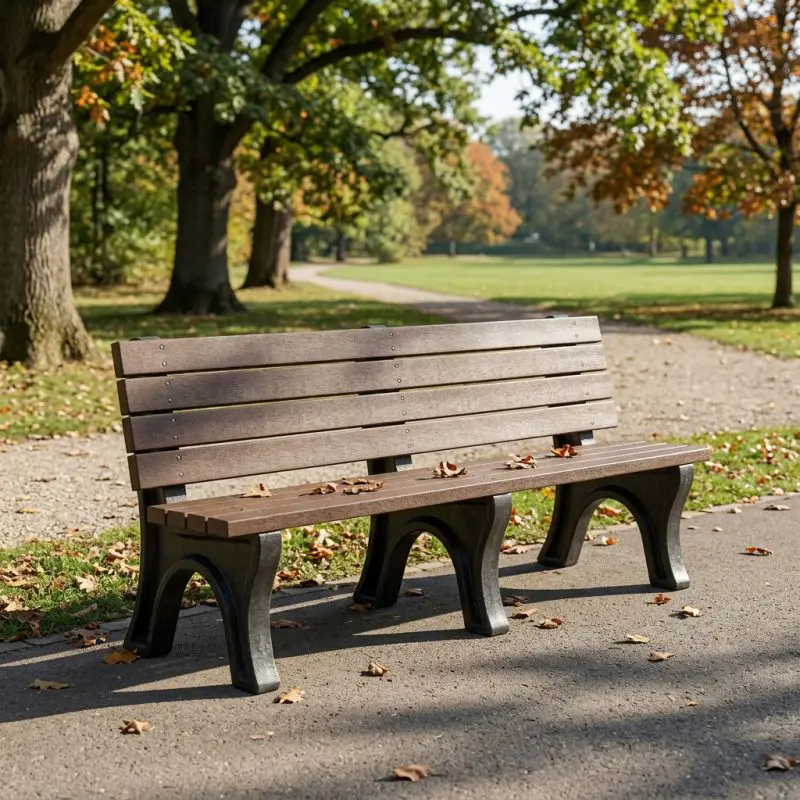
At Polly Products, we make recycled plastic benches and picnic tables for public spaces. If you’re already fixing drainage on a trail, take a look at where visitors tend to pause and whether there’s a spot to add a bench clear of the path. When you’re refreshing a picnic area, look at how people move from the path to the tables and whether the layout makes room for people to gather.
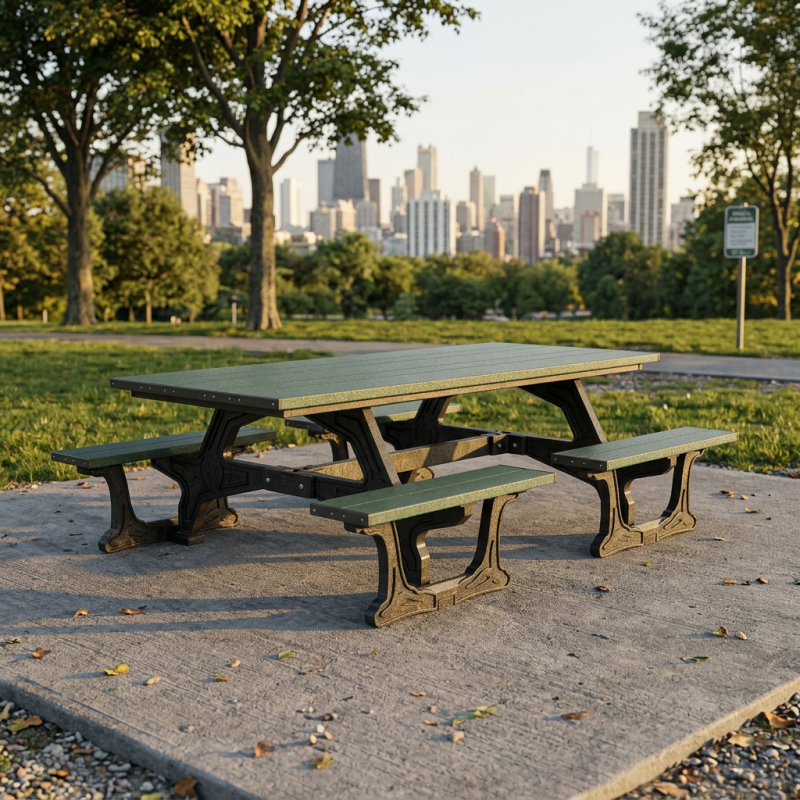
Once the furniture is in place, fold it into the same upkeep routine. After a storm, check for debris around bench and table legs while you’re clearing paths. During seasonal cleanup, a wash with mild soap and water can help remove dirt from recycled plastic seating and tabletops.
For more on routine upkeep, see our guide to caring for recycled plastic outdoor furniture.